
Coastal communities ‘running out of time’ without fisheries fund renewal, say opposition critics as DFO faces $544M in cuts

Opposition critics are calling on the government to ensure that Fisheries and Oceans Canada's ability to monitor Canada's vital resources above and below the waves won't be further eroded with hundreds of millions of dollars in spending cuts. And while the recent budget remains light on specifics, the Bloc Québécois and NDP say the government can't wait until the next one to protect the progress it has made on marine conservation in the past decade.
To meet Prime Minister Mark Carney's (Nepean, Ont.) 15-per-cent savings targets as part of the government-wide Comprehensive Expenditure Review, the recent budget proposes $544-million in reductions over the next four years for Fisheries and Oceans Canada (DFO), beginning with a decrease of $54-million in 2026-27, and further reductions of $193.8-million each in the 2028-29 and 2029-30 fiscal years.
To reach those targets, the budget says DFO will “wind down” research and monitoring activities that have already achieved their objectives or where alternative data sources exist, scale back policy and program capabilities, and reduce management and internal services.
DFO will also begin using AI and other digital tools to "modernize Canada's fisheries management system," and move away from “burdensome paper-based tools,” freeing up fisheries officers to spend more time in communities and on enforcement. The department is also planning to reduce the number of reviews and formal authorizations required for routine, low-risk projects, focusing instead on higher-risk projects that affect fish and habitats.
Following the transfer of the Coast Guard to the Department of National Defence, DFO will also see an additional $500-million in savings from streamlined internal services and the elimination of “redundant functions” no longer required by the department.
Bloc Québécois MP Alexis Deschênes (Gaspésie–Les Îles-de-la-Madeleine–Listuguj, Que.), vice-chair of the House Fisheries and Oceans Committee and his party’s critic, told The Hill Times he is concerned about the potential cuts, but noted that the budget is “sparse on details” as to where those will actually occur.
“What is clear” is the extent of the cuts to the department the government is proposing, Deschênes said, and, despite the assurance that the cuts to monitoring and research would only be done if there is an alternative, he will remain “vigilant” to ensure the department maintains scientific best practices.
Deschênes said it remains critically important for DFO to maintain quality data on the state of Canada’s marine resources to keep watch over everything happening both on and under the sea across all three coasts.

“I'll be extremely vigilant as to the impact of the cuts that they want to do,” Deschênes said. “If we can find economies, that's good, as long as we don't compromise on quality.”
For Deschênes' riding, one significant concern—alongside the region's primary focus on lobster—is how the DFO cuts will affect the monitoring of seal populations and the annual seal hunt, which his constituents hope to expand and develop. But that expansion requires sufficient tracking of not only the seal populations, but also the fish they depend on for food.
“We need to have the best tools to know the state of those resources,” Deschênes said, adding that the government’s decision not to renew the Quebec Fisheries Fund would only exacerbate the concerns over the province's ability to monitor those stocks.
Established in 2019 and jointly funded by the Quebec and federal governments, the fund provided $42.8-million over five years to support the province's fisheries sector, including through scientific research and modernization.
Deschênes said the Bloc will be pushing the government to renew the fisheries funds—noting the government also did not mention the equivalent fund for the Atlantic provinces—adding that the Quebec fund has been vital to the Magdalen Islands’ fisheries association in determining the best time to open the lobster season, ensuring the best returns without harming the overall population.
Announced in 2017, the Atlantic Fisheries Fund provided more than $400-million over seven years to support the fisheries and seafood sectors in the four Atlantic provinces.
However, while the government was unresponsive to the calls to renew the funds, Deschênes noted that the budget's reference to fisheries officers seemed to address another of the Bloc’s main concerns on the file.
Deschênes explained that several witnesses who have appeared before the Fisheries Committee have expressed the view that fisheries officers have been limited in their capacity to do their jobs correctly, in some cases due to lack of resources, but more troublingly, due to allegations of political interference.
“If these changes help those officers do their job better, it’s a good thing, but the main obstacle seems to be political interference, and that is pretty concerning,” Deschênes said.
Alongside the lack of renewal for the fisheries funds, the government is also running out of time to renew critical support for Pacific salmon, NDP MP Gord Johns (Courtenay–Alberni, B.C.), his party’s fisheries and oceans critic, told The Hill Times.
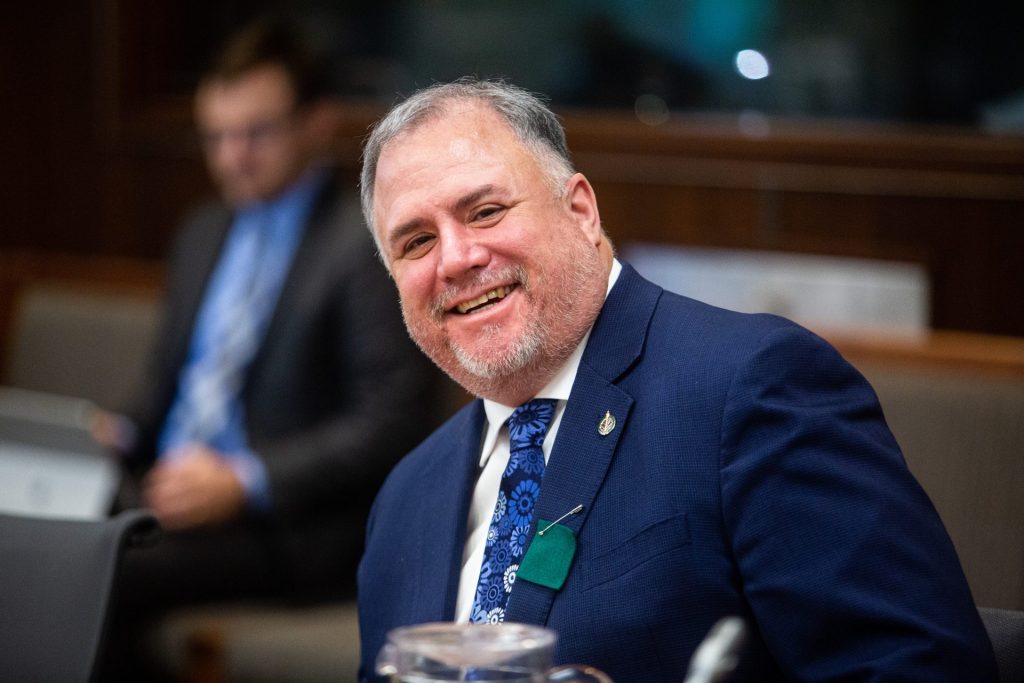
Both the Pacific Salmon Strategy Initiative and the British Columbia Salmon Restoration Fund are set to expire next March. Both are critical to maintaining the progress made in protecting wild salmon populations in the last decade, Johns said.
“We saw the Harper cuts to science investments in habitat protection and conservation, and we saw the stocks collapse,” Johns said. “We're finally seeing wild salmon bounce back in certain areas; now's not the time to take the foot off the gas.”
Alongside the lack of renewed funding for the Ghost Gear Program, which removed abandoned and derelict fishing gear and marine debris from coastal waters, Johns said the government is “basically blowing off coastal communities and the environment” in its latest budget.
However, Johns said those communities can’t wait until the next budget, or even a spring economic statement, given the March funding sunsets.
“Time is running out on these programs, and we need the government to come out in the next month and announce what their plans are,” Johns said.
In response to The Hill Times’ request for comment, DFO said it will “continue to monitor species, conduct stock assessments, and study species and ecosystems following our established science processes, to best inform decision-making for the benefit of Canadians.”
“DFO fishery management decisions are based on the best available science, stakeholder perspectives, and the socioeconomic importance of fisheries,” wrote department spokesperson Naomi Librach.
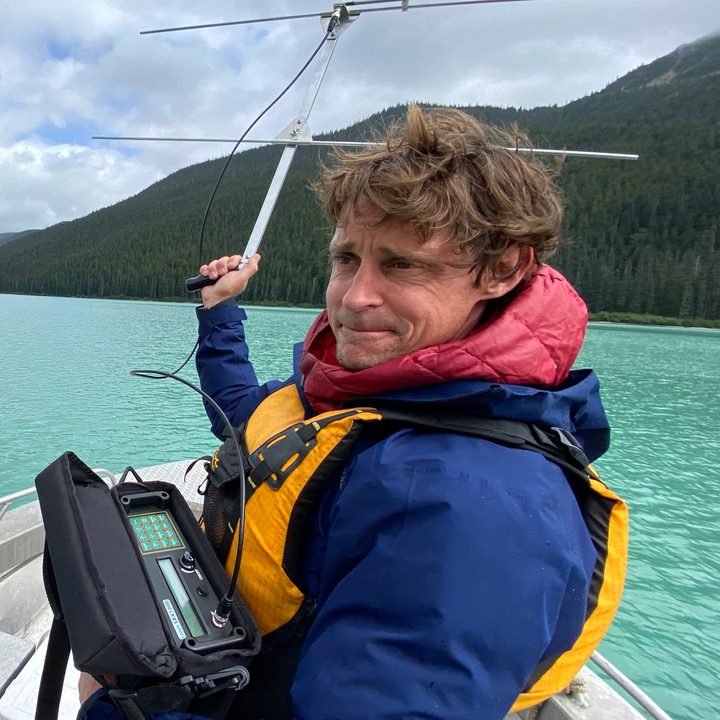
Despite DFO’s assurances, Michael Price, an adjunct professor at Simon Fraser University’s department of biological sciences, told The Hill Times he finds it “extremely ironic” that research and monitoring were mentioned as areas to cut.
Pointing to a recent paper he co-authored in the Canadian Journal of Fisheries and Aquatic Sciences that examined the last two decades of Canada’s wild salmon policy and monitoring of wild populations, Price said, “monitoring is at an all-time low.”
“It's the 20th anniversary of the policy, which was supposed to be conservation first … but in those last 20 years, [monitoring] has gone down by a third,” Price said. “We're now monitoring less than 30 per cent of all Pacific salmon populations in British Columbia and Yukon; we're not even determining whether there's even fish in these spawning streams anymore.”
Price noted that Carney travelled to Terrace, B.C., on Nov. 13 to name the Ksi Lisims liquefied natural gas project as one of latest "nation-building" initiatives, but the proposed gas and power lines will cut through the Skeena Watershed, which is the second-largest wild salmon-producing system in the country.
“At the same time as Carney is fast-tracking national projects, he’s reducing DFO’s ability to assess the risks these projects pose to critically important species like salmon,” Price said, noting that none of the language in the announcements has mentioned any extra layers of caution to monitor potential environmental or species degradation.
“Monitoring doesn’t seem to be a priority for this government and hasn’t been for this department since the mid-1980s,” Price said. “Regardless of where or how they’re cutting, at the very least, we know that monitoring is not going to improve and, at worst, it will continue to erode.”
The Hill Times