
Nearly 2,000 jobs and $1.5-billion to be cut across five departments by 2030, PBO analysis shows

At least 1,927 jobs across five departments will be cut from the federal public service in the coming years, as details slowly emerge about how Prime Minister Mark Carney plans to trim the public service and cut billions of dollars in government spending.
It’s a drop in the bucket for the projected $60-billion in spending cuts and thousands of expected job losses over the next four years, but it’s the most recent data released by the government to the Parliamentary Budget Office (PBO) after the watchdog requested information on how five departments will reach spending cuts of up to 15 per cent by 2030.
The PBO’s analysis, published Jan. 8, detailed $1.5-billion in spending cuts over four years, and a reduction of approximately 1,927 full-time equivalent roles by 2029-30 across five departments: Atlantic Canada Opportunities Agency, Canada Economic Development for Quebec Regions, Correctional Service Canada (CSC), Canadian Food Inspection Agency, and Fisheries and Oceans Canada. Service impacts are expected to be “low,” or “limited,” according to information provided by these departments. Across these five departments, 28 programs are expected to be impacted, the report says.
These five departments combined account for a total of just over 40,000 employees—with Fisheries representing 14,451 and CSC representing 18,902 as of March 2025—though the analysis does not specify exactly where the approximately 2,000 full-time equivalent cuts will be located.
Jason Jacques, Canada’s interim parliamentary budget officer, said his office is requesting the same data from all other departments that fall under the comprehensive spending review.
“From a public perspective, the information is coming out piecemeal, in a very unofficial way,” he said in an interview. “And I think if we can shed a little bit more light on what's actually happening around the government's plan … I think it puts everybody further ahead.”
The PBO initially requested this information from these five departments as part of its analysis of the November budget, which was published ahead of the government’s confidence vote on its budgetary planning. But this information was only released on Dec. 16, 2025, approximately a month after the vote had passed. The fall budget said that the government is planning to shrink the federal public service by about 40,000 jobs compared to its size in 2023-24, but didn't say how the numbers would be spread across departments and agencies.
Jacques said he and Treasury Board Secretariat Comptroller General Annie Boudreau ultimately “agreed to disagree” on when the information should be provided to his office.
“We requested the information from five departments,” he said. “The comptroller general responded and said, 'We have it, you’re entitled to it, we’re not going to give it to you right now.'”
Boudreau told the PBO the data would be provided in early December.
“My point to the comptroller general was, parliamentarians are voting on the budget now,” Jacques said of his Nov. 10 request.
Jacques said his office is entitled to “free and timely access” to information under the Parliament of Canada Act and, in not receiving it, sought a remedy via bringing the issue to the Speakers of the House and Senate.
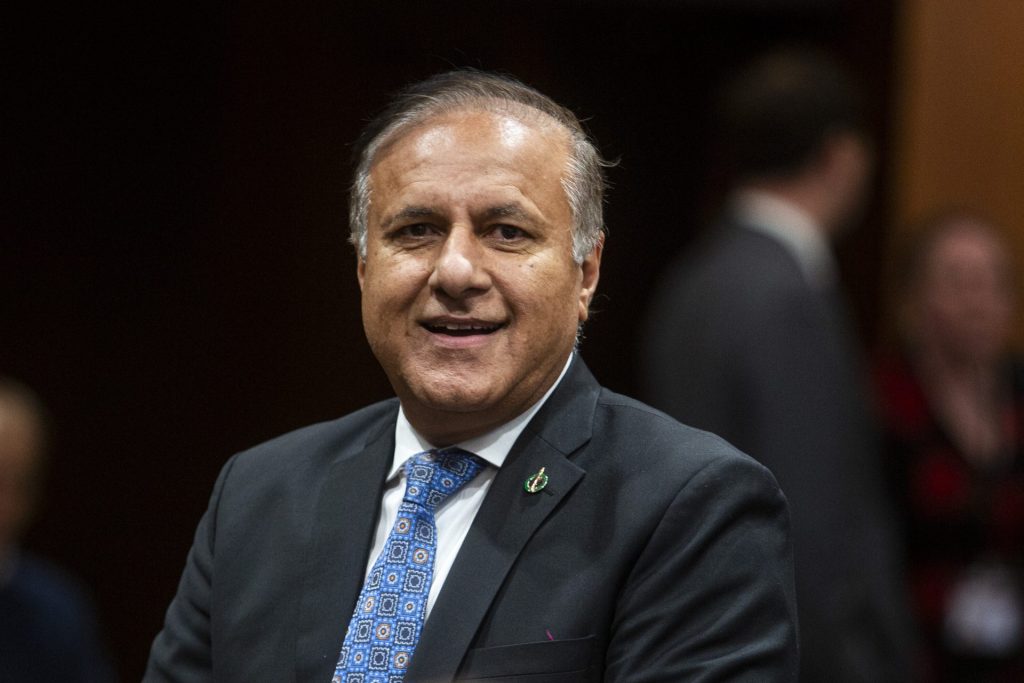
Treasury Board President Shafqat Ali (Brampton–Chinguacousy Park, Ont.) was grilled about the information not being provided before the budget vote when he appeared before the House Government Operations and Estimates Committee, or OGGO, in late November. Then, he defended the decision, saying details about cuts “were not finalized at the moment, and it would have been unfair.”
Workforce adjustments, or indications that job losses are coming, began to trickle through the public service in December, and more departments are expected to announce their plans in January.
The Jan. 8 analysis says the departmental data “would be shared only after parliamentary approval of the [comprehensive expenditure review], citing concerns that early disclosure could compromise employee trust and jeopardize management-union relations.”
Treasury Board spokesperson Matthieu Perrotin said in a statement to The Hill Times that “it would be inappropriate to share information in advance as it could be harmful for employees to learn through a third party that their role could be affected—a point the parliamentary budget officer agreed with.”
“As Treasury Board indicated in its initial response to the parliamentary budget officer, we are committed to providing the information to the office in a transparent and timely manner, in keeping with our obligations to employees and parliamentarians,” he said via email.
Devil in the details
Jacques has been critical about the lack of detail around the spending review, which the government projects to result in $60-billion in savings by 2030. But, he said, compared to the 2012 Harper-era Deficit Reduction Action Plan, the last time the government took the scissors to the public service, “there is definitely more information in comparison to the 2012 exercise.”
In 2012, departments refused to hand over data, he said, and the PBO ended up taking the government to court.
“The discussion right now is a very different one,” he said. “The point of friction between ourselves and the government is not, ‘Should the data be released? Is it relevant? Is it pertinent?’ It’s 'When it will be released?'”
While the government hasn’t been very clear when the details of spending cuts are going to be released, he struck a note of optimism: “We’re moving in the right direction, right? The information is available.”
In the case of these five departments, the PBO received a detailed breakdown of projected savings by program, including expected staff reductions, and potential service-level impacts for 2026-27 to 2029-30. However, the office did not publish this information, as all five organizations requested that the data remain confidential “until federal employees are notified of potential human resource impacts.”
The PBO’s analysis said this level of confidentiality is “acceptable for fulfilling its mandate,” but Jacques said parliamentarians have a “different level” of fiduciary responsibility.
“The confidentiality doesn’t impede the PBO from doing its work,” Jacques said. “It might be a different story for the public and parliamentarians, but I’ll leave it to parliamentarians to make that determination.”
Jacques said he felt the public service is in a “challenging situation” in rolling out substantive cuts over a short period of time.
“And I can understand that there are communications trade offs or transparency trade offs that are associated with that,” he said. “But it’s very much up to parliamentarians. There’s more information there, and it’s up to parliamentarians to determine if they want to push on it and obtain it.”
mglass@hilltimes.com
The Hill Times