
German, South Korean firms compete for submarine contract with domestic partnership pitches as feds near final decision

The federal government is entering the final stretch to select a successful bidder to procure the nation's new submarine fleet, as a German and a South Korean company compete to win the multi-billion contract through domestic partnerships in Canada.
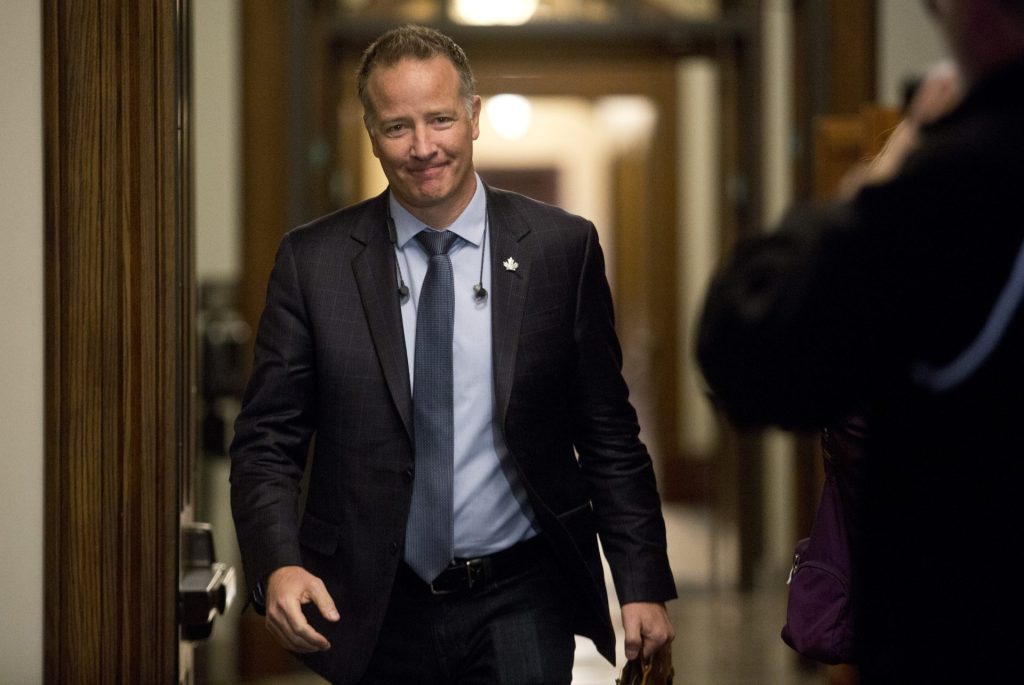
The federal government is set to announce its choice for the new submarine fleet by the end of this month, but the process to identify a preferred supplier for the contract “is still underway,” according to Sofiya Sapeha, press secretary for Secretary of State for Defence Procurement Stephen Fuhr (Kelowna, B.C.) who leads the Defence Investment Agency (DIA) spearheading this procurement.
That decision will ultimately be based on the economic and industrial benefits the selected bidders can offer Canada as well as opportunities for long-standing strategic partnerships, according to the government.
“We’ll go from two qualified suppliers to a preferred supplier, and the Government of Canada will enter into contract negotiations with the preferred supplier so we can turn lots of memorandums of understanding (MOUs) and promises into tangible outcomes for Canada,” Fuhr told journalists on a June 22 call from Australia. He was there to sign a $2.5-billion contract to buy Over-the-Horizon Radar technology developed by BAE Systems of Australia.
The two firms competing for the multi-billion-dollar sub contract—South Korea’s Hanwha Ocean and Germany’s ThyssenKrupp Marine Systems (TKMS)—submitted their proposals back in March. Since then, and for some time before, the companies have been partnering up with Canadian firms to demonstrate to the government the value they can offer should they be selected.
While the government did not release an exact program cost for a full fleet of submarines, media reports have estimated the price of a full fleet to be between $60-billion and $100-billion.
The new submarine fleet of 12 will replace Canadian Navy’s Victoria-class submarines, which will remain operational into the mid- to late-2030s. The German firm has said if a contract were to be awarded this year, it could deliver the first submarine well in advance of 2035, while the South Korean firm committed to delivering the first submarine by 2032, and four more by 2035, completing the full fleet by 2043.
TKMS, Hanwha highlight partnership deals
Nils Beyer, vice-president of communication at TKMS, told The Hill Times that the firm's proposal is anchored in “a comprehensive suite of major teaming agreements and investment commitments designed to establish a long-term, sovereign submarine capability in Canada.”
He said through these partnerships, the company is looking to work with the Canadian industry for sustained participation across both domestic and international programs in areas like manufacturing, digital technologies, shipbuilding, infrastructure, and more.

Of the more than dozen major agreements TKMS has signed with Canada-based companies is a teaming deal with Cohere for integration of advanced artificial intelligence solutions into submarine systems; an agreement with Seaspan for infrastructure development, and in-service support of the submarines; an agreement with EllisDon for the development, modernization, and lifecycle sustainment of submarine-related facilities; and a deal with Magellan Aerospace for manufacturing, systems integration, and export-oriented production.
TKMS’ other agreements include Valbruna ASW for collaboration on the melting and production of non-magnetic submarine steel; a partnership with E3 Lithium creating a framework for research collaboration as well as integrating Canadian lithium resources into strategic supply chains; a partnership with Gastops for submarine automation system sustainment; and a teaming agreement with CAE for submarine training and simulation. The firm also has pacts with Indigenous business partners.
These are only some of the agreements listed in TKMS’ response to The Hill Times. The company underlined that its proposal to the government establishes a forward-looking industrial model in which Canadian partners are not only supporting the submarine contract, but are being integrated into TKMS’ global supply chain and long-term program pipeline.
Meanwhile, Hanwha Ocean signed onto 83 agreements, including 67 with Canada-based firms as well as more than a dozen with government departments including Global Affairs Canada; Innovation, Science, and Economic Development Canada (ISED); Natural Resources Canada, and the Ontario government.
A list containing memorandums of understanding signed between Hanwha and Canada-based companies—including those owned by Canadians and Canadian subsidiaries of international firms—shows that more than half of the concentration for partnerships are focused in Ontario and Quebec while the remaining is disbursed around the country. MOUs are legally non-binding, but suggest an intention to sign a contract in later stages.
The South Korean company has signed onto more than 30 MOUs in Ontario, 14 in Quebec, and 12 in British Columbia, five in Alberta, and more than a dozen in Atlantic Canada.
The agreements—which will only come into effect if Hanwha wins the contract—are mostly for maritime capabilities and naval systems. Other deals are for a wide-range of capabilities from AI, digital services, software and cyber systems to space and satellite systems, manufacturing and industrial production and research and development.

More than a dozen agreements are slotted for maritime and naval systems, including capabilities for sonar systems, torpedoes, navigational and communication systems, and shipbuilding.
For manufacturing and industrial production, companies that secured agreements with Hanwha include Algoma Steel, Liburdi, Novarc, Spartec, and Magellan.
The company has several MOUs with technology firms like Modest Tree, Cohere, Blackberry, Prompt, ForceN, and Astrus whose work focusses on AI platforms, robotics, cybersecurity, and other digital systems.
Hanwha says that its impact on Canadian GDP between 2026 to 2044 is pegged at more than $120-billion through delivery of all 12 subs with more than 80 Canadian partnerships. The company bases the $120-billion figure on an analysis done by KPMG, which used StatCan metrics as well as Hanwha’s submarine proposal to include the procurements, investments, projects and partnerships.
Hanwha also says its offer includes a $3.1-billion investment in Canada through Hyundai Auto to build a new hydrogen transport truck manufacturing ecosystem with a hydrogen liquefaction plant in British Columbia, 32 hydrogen charging stations in B.C. and Alberta, and a hydrogen transport vehicle manufacturing plant would likely be constructed in Ontario between 2030-2035.
Hanwha says plans to have partners and projects in five primary provinces, while investing $5-billion more across the other provinces.
“While it's a government initiative, at the end of the day, the workflow, the benefits, the investments, the economic input is going to incur at the provincial level,” Glenn Copeland, Hanwha Canada's CEO, told The Hill Times in an interview, adding it tries to create a pan-Canadian approach when making massive investments.
“So it's not a function of dumping everything in one very cloistered sector. It's a function of where you can spread this across to get maximum benefits for what it is.”
Meanwhile, TKMS' Canadian partnership strategy is focused on building "resilient national industrial ecosystem that draws on expertise from across the country" according to Bayer, who said the regional distribution of its partnerships reflects Canada's depth of capability in areas such as advanced manufacturing, digital technologies, AI and defence innovation.
A 'public relations battle'
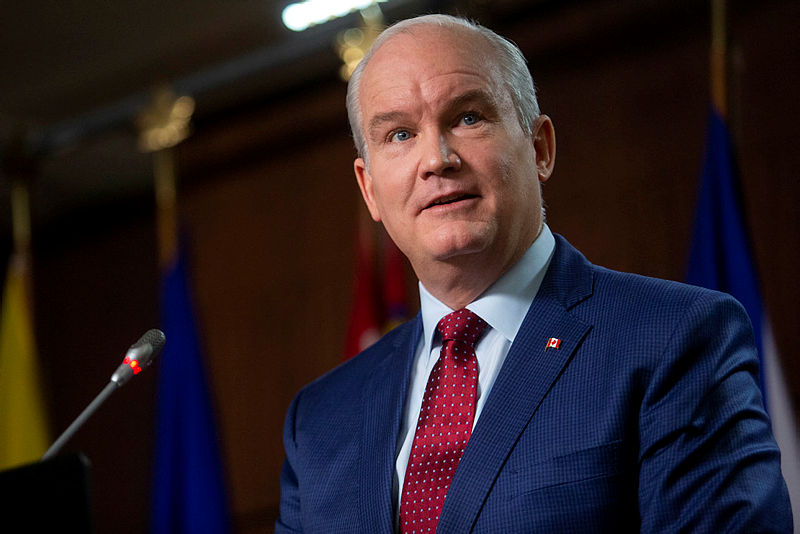
Former Conservative leader Erin O’Toole, who now serves as president and managing director of ADIT North America, told The Hill Times by email that the submarines will be one of the fastest major procurement projects. He called it a test case for how procurements can encourage additional economic benefits, and through industrial and technological benefits. Looking at the MOUs, O'Toole said, “a lot of this stuff is unlikely to be delivered soon and some we will never see regardless of who wins.”
“The ITB [Industrial and Technological Benefits] program has had a historic backlog in the tens of billions of dollars and a big lag. This is why servicing and support along with innovation with our industry should be given extra weight," he said. "A lot of derivative promises in some non-defence sectors appear to be more marketing than a strategic approach to defence capacity in my opinion."

Clem Srour, a former director at ISED's ITB branch, told The Hill Times that the competition between the two countries is more of a "public relations battle" at this time as opposed to real work that is certain to flow out of a submarine contract, as these MOUs are non-binding which means the parties are not obligated to carry out the terms.
“At that point, the selected firm will have to implement what is doable, and I predict that many of these MOUs will fall by the wayside,” he said.

Looking at a list of MOUs signed by both firms, Srour said his impression is that Hanwha is looking to “wow the government” with a wide range of agreements, and leverage the full breadth of their capabilities across all their family of companies.
“On the other hand, TKMS [seems] very focused on leveraging their existing expertise to deliver a naval system” he said.
This speaks to the fact that Ottawa is looking to leverage this procurement to establish a much broader economic partnership with either countries, Srour argued.
Srour questioned to what extent Canadian companies will actually be involved in direct supply chain work on this country's new fleet of submarines.
“There are lots of interesting things in [both firms' list of agreements with Canadian partners], but actual submarine supply chain work is hard to discern. If it does exist, both companies need to paint a clearer picture of what that looks like,” he said.
Copeland said that most of his company’s MOUs are submitted in their proposal to demonstrate the business' commitments and the benefits it is offering to the government. They represent “a start to a process that's going to continue on for multiple decades” and a relationship built between the two countries, he said.
“When we talk about this particular program, it's not like any of the others in the sense that there's no prescriptive approach to the industrial and technological benefits or the offsets, or the investments in this particular program,” Copeland said.
He said the government asked the firms to explain how they are going to help Canadian industries they identified are having a hard time. Some MOUs are conditional upon winning the program, but in some “you're not going to throw the baby out with the bath water because you didn't necessarily win the submarine program,” he explained.

Also looking at a list of many MOUs signed by both companies, Anessa Kimball, a professor of political science at Laval University whose expertise includes defence spending and procurement, said both suppliers “understand the domestic politics game in Canada is important and that Ontario has a level of bargaining leverage in that it hosts the federal capital.”
“Much of this is playing to domestic electoral bases since the largest amount of benefits would arise from in-service support rather than the acquisition itself. From a Canadian industrial and technological benefits perspective, the government is working to clarify how to determine the ‘Canadianness’ of foreign-owned companies in Canada. Some of this is working to appease major American firms worried about increased risks of abandonment,” she said.
ikoca@hilltimes.com
The Hill Times